
What Impact Will the Issuance of the “K Visa” Have on Studying in China?
2025-08-25 05:34
107 views
留学资讯
admin
What Impact Will the Issuance of the “K Visa” Have on Studying in China?
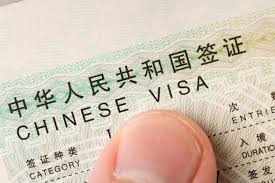
The K visa is a new category of ordinary visa introduced by China starting from October 1, 2025, specifically issued to foreign young science and technology talents entering China.
Will it affect the study-abroad market in China? Let’s dive deeper into this question.
First, let’s look at the official interpretation of the Decision regarding the K visa:
Officials from the Ministry of Justice, Ministry of Foreign Affairs, Ministry of Public Security, and the National Immigration Administration answered questions on issues related to the “Decision of the State Council on Amending the Administrative Regulations of the People’s Republic of China on the Entry and Exit of Foreigners.”
↓↓↓
Key Takeaways:
1. Background of the “Decision”
China’s development requires the participation of global talent, while at the same time providing opportunities for them. To thoroughly implement the talent-power strategy in the new era and to facilitate the entry of young foreign science and technology talents, the measure aims to promote international cooperation and exchanges among young talents.
2. Main content of the K visa
The K visa has been added and will be issued to foreign young science and technology talents entering China. Applicants must meet the qualifications and requirements set by relevant Chinese authorities.
3. Application requirements
The K visa is issued to foreign young science and technology talents who have graduated with a degree (bachelor’s or above) in science, technology, engineering, or mathematics from well-known universities or research institutions in China or abroad, or who are engaged in education and research in these fields at such institutions.
4. Features of the K visa
The K visa will provide greater convenience in terms of entry frequency, validity, and duration of stay. Holders may engage in educational, scientific, cultural exchanges, as well as entrepreneurial and business activities. Importantly, applicants are not required to have a domestic employer or invitation unit.
Possible Impacts on Studying in China
1. Enriching visa options and driving implicit growth in studying in China
Previously, foreign students usually had to apply for an X1 or X2 student visa. With the K visa, eligible young science and technology talents who wish to pursue research-related study in China now have a more tailored option. Since holders can engage in educational and scientific exchange, studying can be regarded as part of such exchange activities.
2. Simplifying the process for specific groups, boosting educational and research collaboration, and expanding the study-abroad market
The K visa does not require a domestic employer or invitation unit. This means that talented young foreigners who wish to study in China can apply without having to secure pre-arranged cooperation or an invitation from a Chinese institution. They can first enter the country, then finalize their study or research projects, thus lowering preparation barriers.
3. Helping universities attract more talent, enhancing internationalization, and promoting substantive development in studying in China
With more flexibility in entry frequency, validity, and duration of stay, the K visa helps Chinese universities attract high-quality international young science and technology talents. This enables them to take part in cutting-edge research and academic projects, further advancing China’s research capacity and international influence.
Conclusion
The K visa has significant potential to promote studying in China. Aimed at young foreign science and technology talents, it removes the requirement for a domestic employer or invitation, and offers greater convenience in terms of entry and stay. This will help Chinese universities and research institutions attract more outstanding international young talents, who can enter China first and then decide on specific study or research programs. Ultimately, it will foster international research collaboration, enhance academic exchanges, and improve the attractiveness of China’s study environment as well as the global influence of its education and research sectors.